When I use the word charisma, it’s with a fairly particular definition. Charisma is the quality of magnetism, of attractive force. When something draws others into itself, it is charismatic. I believe that charisma is a huge element of media, of music. It’s the hook, the bait, it’s what keeps an audience engaged and attentive without them realizing they’re engaged and attentive. More specifically, it is that which incentivizes and leads participation with the song. That’s charisma at its most basic, most simplified definition: attraction. However, to truly define it, to define it the way I use it, I need to explain what I mean by participation. How can you participate in music, in a song? Unless it’s live, it’s just prerecorded sound- how do you participate to something when all you can do is listen? It’s simple: you need to work for it. Participation comes when the audience is required to be present, to be actively engaged. When it’s not strictly easy to listen, when you have to put in time and attention, when you have to try to listen, have to apply effort, you are participating. It’s an asynchronous participation, but participation nonetheless.
It’s worth noting that the idea of participation in a song is not an unfamiliar concept, I’m just giving it a stricter definition and purpose. The most typical, messily-defined version of this, I think, is when people say a song is catchy but has no depth, or vice versa. Where catchy means convenient and depth means it forces participation. And depth does mean participation. Or rather, participation means depth; depth is a result of participation. Even stupid things get depth when you participate with them in good faith. Participation is how you connect, is how you communicate, is how you form relationships. Even if a song is kinda an airhead, if you participate with it you can form a relationship and find depth, or maybe even create it. If songs are people, the goal of a song, of a person, is to form a connection and relationship with them. Some people are fun at parties but never really open up about themselves in any meaningful way. Convenient and easy, but doesn’t force participation. Other people are more private but open up easily to close friends. Inconvenient, but does force participation. Some people are charismatic, which means that regardless of what kind of persona they project, they encourage all interactions with them to be participatory. They’re fun at parties because they ask you interesting questions about yourself and push you to try new things with them. They immediately go to hang out with the host’s dog instead of socializing, but when it’s commented on they offer to teach how to teach the dog a new trick. Or whatever else- so long as they encourage that participation, encourage you to put in some work instead of just standing around, they are being charismatic. Charisma is too broad of an idea to have only a few potential ways it can be applied.
So yes, charisma is attraction, but that’s reductive. Understanding how participation works in music, in an audience, is the critical piece. Charisma isn’t just that which attracts to the song or the content, it’s that which attracts to the work and the effort. It’s what makes participating enticing. The easiest way to see charisma in action, I think, is by providing a testing ground, a structure and set of scenarios in which we can watch for the various behaviors of charisma. This structure could be any number of things; the one I’m using here is the album.
I’ve often heard it said that albums are dying, killed by streaming services, killed by the algorithm. Spotify, that ruthless bastard. This is, I think, largely because short things offer a different type of charisma from long things. Longer form content is harder to listen to, it requires more work. This makes it extremely effective- once you can actually trick your audience into engaging in that work. Short form content has grown to be so massively popular because a song (or short, TikTok, etc.) is easier to listen to than an album (or video, episode, etc.)- it requires very little work to consume something small. There is the accessibility of convenience, of an absent audience: a song. There is the inaccessibility of inconvenience, of a present, participating audience: an album. Participation is valuable because in the event that it successfully occurs at all, it creates a connection between the work and the audience, which is a primary goal of any work. But, demanding participation is risky, because it makes engaging with the work less convenient, and so can make the work less accessible. By that same token, not demanding participation is risky, because it means that the audience can partake without participating, can consume without connecting. You’re left with unideal choices: a small, invested audience; a large, disinterested audience; some compromise, somewhere between the two.
Thus are established our testing grounds: now to begin observing the functions and behaviors of charisma itself. Albums have lots of readily available participation, but that can be its own barrier. Individual songs have less available participation, so they are more approachable- because there is less to approach. So how does charisma fit into this? Charisma aims to attract and direct the audience to participate with a work, and both of these formats clearly have their own struggles with inducing participation. Both formats want the assistance charisma provides, though how it is manifest differs. You need a way to encourage participation in a work that doesn’t demand it, and you need a way to encourage participation in a work that does demand it. Those may sound like they’re the same, but they’re very different. In one, the audience is already engaging in the work (on some level), and now they need to be made to participate with it and connect to it. In the other, if the audience engages in the work they are already participating and connecting to it, but the audience needs to be made to actually engage in the first place. To be too easy, to not offer an avenue for work, is a failure. To be too difficult, to make that initial step prohibitively painful, is a failure. Success lies in some compromise, or perhaps in holding opposites simultaneously. That’s charisma.
With all of that in mind, the definitions and the possible applications and the caveats thereof, I want to talk about what is charismatic to me. This is the format, yeah? Definitions and analysis, followed by my personal commentary; I am both scientist and lab rat. So, what are some structures and behaviors and patterns that draw me to properly participate with a work?
Broadly speaking, I like it when things are interesting, that’s what makes me want to participate. Primarily pleasant things are too often too easy for me to consume blindly, though there are exceptions. This is, of course, largely a preferential thing. Many people are pulled to participate with things that are familiar to them, to learn and love and really feel out the extent of the small differences. I’m not, not really. I like things that catch my attention, that are even just a little atypical, that make me stretch to hear them. I like interesting harmonies (honestly, anything other than a basic parallel harmony can get points for this), I like interesting bridges, I like interesting song structures, I like interesting lyrics, I like interesting rhythms. I like when things are interesting, it’s easier for me to want to work for something new than to work to grind away at a nugget of novelty within something I already know. Because of that, something that prioritizes accessibility over complexity either must have some complexity, or it needs to just be so ridiculously easy to listen to that I’m willing to listen to it two dozen times before starting to demand more from it. The axis that measures from shallow ease to complex difficulty has a kind of Goldilocks zone where you will, for sure, get something charismatic; my personal preferences shift that whole zone farther into the complex difficulty end.
Of course, there are still things that are charismatic to me that aren’t necessarily interesting or intellectually stimulating, elements that I just enjoy. I don’t enjoy these things for any particular reason, just pure preference. And there are loads of these, loads and loads. A prominent bassline, a cohesive theme, use of trumpets, use of a sax (especially in an instrumental section), use of both male and female vocals (not even necessarily a duet, just giving both parts to sing in the song makes me like it more), specific song structures (long first verse, chorus that only gets through part one first time around, two chord verse with three/four chord chorus). I love when there’s the little bass walk down from the I to the vi. Just three notes, do-ti-la, very common, but I like it. I love songs with a theme, I love when songs are about winter. I like seasonal songs in general; I love a good winter vibing song. I think the most specific, most random, lowest effort thing that makes me want to like a song, that makes a song charismatic to me, is when a song has some type of background chatter at its beginning and/or end. The interviews in Pressure Machine, the utensils before “Flower Moon” by Vampire Weekend, the introduction to “Blame It on the Girls” by MIKA- stuff like that is my jam. Sometimes these preferences are honestly little embarrassing to me because they’re so shallow. For instance, BPM. Slower songs are, on average, harder for me to get invested in than faster songs. This is pretty consistent. The effect is lessened somewhat for “groovy” songs, where the slower speed is part of letting in space for rhythm, but by and large, slow songs are harder for me to engage with. I like to think it’s just because I’m so smart, a massive-brained gigachad too cool for school, my brain always running too fast for dumb-person slow songs to actually stimulate it, the slow songs are too easy for it, they can’t keep up with my incredible genius. Yeah. More likely, it’s an effectively random preference. Sometimes charisma is like that, random and bizarrely specific. These examples are all clearly and obviously not measures of quality, not by any means. They’re just random preferences I happen to have.
There’s also stuff that’s uncharismatic to me, stuff that discourages me from spending the time and effort to participate and learn to like a song. To name just a few: some specific genres, overt weirdness/unpleasantness, and dumb lyrics can all make it harder for me to want to participate with a song. Country as a genre tends to be uncharismatic to me, it turns me off. Rap tends to be uncharismatic, or any song that just has lyrics played over a 10 second looping beat for three minutes. Another thing that can make it harder for me to participate with a song is humor. Comedy songs are pretty hit or miss for me. I like funny songs, I like a song that doesn’t have to take itself too seriously; I don’t like a song that uses comedy as an excuse to disregard the responsibility to take itself seriously at all. Funny songs should still at least be musical and clever, if not meaningful. A funny song that is not musical or clever or meaningful is lazy and uncharismatic. Intentionally unpleasant/weird stuff is typically uncharismatic for me. I can respect the decision as a way to generate interest, but most often I am mostly left wishing that the song, first and foremost, sounded good. Jack White’s “Misophoniac” is unpleasant for a reason, and I think it does make it interesting, and I think that in that song he did about as good a job with the technique as can be done (the song is literally titled misophoniac, it’s on theme), and even so I think I wish I could listen to a version that doesn’t have the annoying repetitive noises in it. “Dumb lyrics” doesn’t mean that the lyricism is necessarily poor; it more often means that the content of the song is cringey or just shallow. Charlie Puth has dumb lyrics most of the time, he’s a whiner. AJR grates on me, I want them to grow up a little. It’s fine to have anxiety and feel the things they’re feeling, that’s normal and relatable. For those things to continually be the only things they’re feeling, that they still feel need to be published, year after year, is not interesting to me, that’s not worth my time. There are also some lyrical things that I can get picky over, where I do feel that the lyricism itself is distractingly poor. Where a line or word or phrase is just… awkward. Sigrid hits those sometimes, where a line is a little too wordy, a little too on the nose. Where a metaphor feels forced, or where a phrase is used as a lyric instead of as an outline, running things from behind the scenes. Some phrases are good to be used as is, they have lyric vibes, and others don’t. I don’t know how to define that, exactly. It’s a very intuitive feeling, but I feel it’s true. Jim Croce knows- I don’t think I’ve ever heard an uncharismatic line from him, his phrases and metaphors are clean, they flow.
And again, those are all just my preferences. It’s possible, and expected, that I’m attuned to the grooves that turn you off. What I’ve offered is just a sample, an example of charisma as I’m trying to define it.
Charisma’s purpose is very simple: get the audience to participate with the work. It’s clear to see however, that while this purpose is simple, its application is anything but. In an accessible, easy song, charisma has to go into overdrive calling attention to anything novel, getting the audience to listen to the song again and again in the hopes that the repetition will cause them to notice more and not less. In an inaccessible, difficult song, charisma works its tail off just to get people in the door, to listen all the way through in good faith even once so as to expose the complexities and opportunities that are present there. Mechanically, these goals can be achieved in any way. That which seeks to accomplish the goals, that which encourages the audience to participate with the work, is charisma. Truthfully, if charisma is applied fully and correctly to a song, it will no longer be accurate to call it complex and high potential (but inaccessible and difficult), or to call it accessible and easy (but potentially superficial). A song that can truly be called charismatic will, paradoxically, be both accessible and easy and inaccessible and difficult. That is, it will be draw on the complexity of the difficult while maintaining a fun, easy approach. It will be accessible and complex, or at least effectively so. Maybe a song isn’t truly deep, but it’s just so darn catchy that you can’t help but listen to it until you feel like it is. Practically speaking, that means it is deep. That’s charisma.
By this frame, charisma becomes capable of meaning practically any and every part of a song. It’s the hook, the lyricism, the musicality, the vibe; it’s whatever “completes” the song. When you try to break down the quality of charisma into its component parts, it becomes more nebulous, not less. This is expected, though, and it’s okay, because charisma exists only subjectively. It can be quantified only insomuch as the opinions of people can, which is to say, ineffectively (and only broadly). What is accessible to me will not be accessible to everyone. What is difficult and complex to me will not be difficult and complex to everyone. What is charismatic to me will not be charismatic to everyone. Not everything that makes me want to engage in and participate with a work will do so for everyone else. But that doesn’t mean it’s a useless tool.
Understanding exactly how charisma is a factor, mechanically, isn’t possible, but I think even just properly understanding that it is a factor has its own value. It helps artists know what they are trying to connect to what, to know the process and the method by which they make something that can be powerful. It helps an audience understand why they like or don’t like something, if it’s worth pushing through something that isn’t charismatic for you but will still have participation opportunities, even if they aren’t necessarily easy. It helps critics reframe and better understand their own biases and how to overcome them. Just because something is subjective doesn’t mean that quantifying and modeling it isn’t a useful exercise. The result may not be wholly accurate, but that doesn’t make it worthless. Not to mention the value inherent in the actual process of obtaining that result.
For a final conclusion, a reminder: charisma is not a truly critical element in good music. It really isn’t. Charisma is what entices an audience to participate, to come and to stay if it’s really effective. But not every audience needs to be enticed. Personally, I find far more value in an uncharismatic song that’s deep, that you have to work for, than an uncharismatic song that comes easily but is shallow; I acknowledge that that’s a preference. Because I listen to music according to a systemic process rather than my own fleeting whims, it’s inevitable that I find I enjoy and participate with music that I otherwise never would, with music that didn’t actually entice me to participate. Charisma is grease, it’s a tool. It’s a powerful tool, certainly, one worth paying attention to, but I don’t mean to purport to it some false magnificence.
I do think it’s neat, though.
as demonstrated by
An important note: the examples I provide here are, first and foremost, going to display what I believe is charismatic, what I believe “entices the audience to participate with the work”. What is charismatic and what is not is ultimately subjective. The difference between an effective song and an ineffective song is ultimately subjective. That is inevitable. That said, I still believe charisma is a useful term, a useful frame through which one can better understand and critique. My hope is that my examples below will provide an example of what charisma could mean, and that that specific definition will provide a range and make clearer what I mean by charisma generally. I don’t mean to say that this charisma and everything else is wrong. This word is a tool, and this is how I use it.
(And, of course, these examples are few- this analysis can be applied to… well, pretty much everything.)
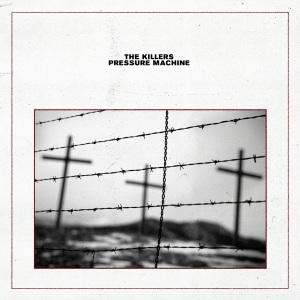
Pressure Machine is an excellent example of something that has very little charisma but is still fantastically good. Charisma isn’t necessary. It’s not everything, but it does makes everything easier. It’s grease. Difficult to consume, but offers back a lot to engage with. Low charisma, but I still like it. It’s got the half of charisma I like.

Still Woozy is some of my absolute favorite pop. I look to it as a gold standard for charisma in music. It’s so easy to get into, and once you listen to it a couple times for the easy parts you can’t help but find its depth. Easy to consume and lots to engage with. High charisma.
I know Talking Heads is beloved, but I believe they showcase an abject failure of charisma. They are initially unapproachable, and miserly in how they reward subsequent participation; they aren’t worth their struggle. Difficult to consume and offers little back to engage with. No charisma.

The Wombats aren’t super interesting. They’re enjoyable, but in a fairly superficial way. They’ve got the half of the equation that gets you in the door, but they don’t find the sweet spot that can keep you there. Easy to consume, but little to engage with. Low charisma, and the half of charisma that I don’t care for.
 tunafruitsandwitch